
Pharmaceutical Cleanroom SCADA / EMS / BMS
Validation-aware automation, environmental monitoring and building management
SCADA, PCS, EMS and BMS delivered under one validation framework: every control output has a single owner, cleanroom temperature, pressure and particle data share one alarm model, and audit trails and e-signatures sit inside validation scope.
SOLUTION ELEMENTS
- Industry
- Pharma & food
- Products
- 5 systems
- Delivery
- Design · build · install · commission
Context
Automation in pharmaceutical cleanrooms is often split between vendors: process control, environmental monitoring and building management each with its own system. The graphics look complete, but the boundaries are not—one pressure alarm fires in three systems, a parameter change is logged on only one server, and validation cannot establish which system owns the function.
This solution defines system boundaries and the interface register before discussing features, and designs validation documents alongside the system instead of writing them after commissioning.
Requirements
- Clear responsibilities and interface register for SCADA, PCS, EMS and BMS, with a single owner per control output
- Traceable monitoring of cleanroom temperature, humidity, pressure, non-viable particles and microbial samples
- Audit trails for critical parameter changes, alarm acknowledgements and interlock bypasses
- Electronic signatures, time synchronisation and tiered permissions supporting data integrity
- Validation documents including DQ/IQ/OQ/PQ, FAT/SAT and traceability matrix
- Segmented control and information networks with backup and restore for historians
Our approach
Boundaries come before features: PCS handles equipment sequencing and recipe execution, BMS handles AHUs, chillers, exhaust and pressure interlocks, EMS handles cleanroom parameter acquisition and excursion alarms, and SCADA provides the plant-wide view, alarm aggregation, history and reporting. Each control output belongs to exactly one system; the others are read-only.
Four engineering advantages
Plan early: control rooms, cabinet rooms, cable routes and embedded conduits are fixed against the plant layout and line schedule, avoiding later coring and rework. Build compliance in: system boundaries, data integrity and validation scope are defined against common FDA, EMEA, Schedule M and WHO GMP expectations, with the applicable clauses confirmed by the project's jurisdiction. Detail the design: equipment interfaces, communication protocols and embedded works (floor, wall penetrations, road crossings) are frozen before construction. Choose the right scope: functionality, verifiability and cost are traded off deliberately; cabinets and networks are sized to actual I/O rather than padded.
Compliance and data integrity
Designed to common GMP, 21 CFR Part 11 and EU GMP Annex 11 expectations: unique accounts, tiered permissions and mandatory electronic signatures for critical actions; operator, time, reason and before/after values recorded for parameter changes, alarm acknowledgements and interlock bypasses; a common time source for servers and controllers; audit trails that cannot be disabled or edited.
Cleanroom environment
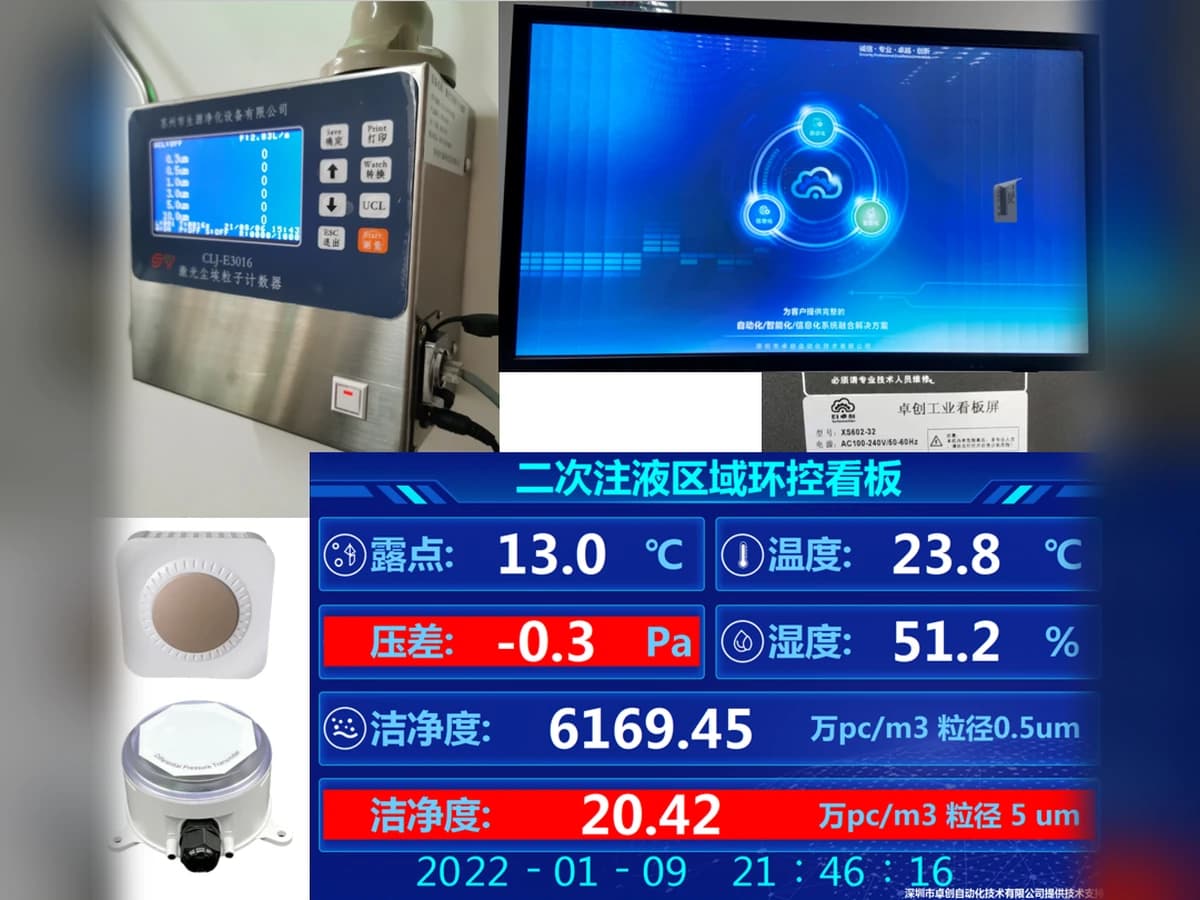
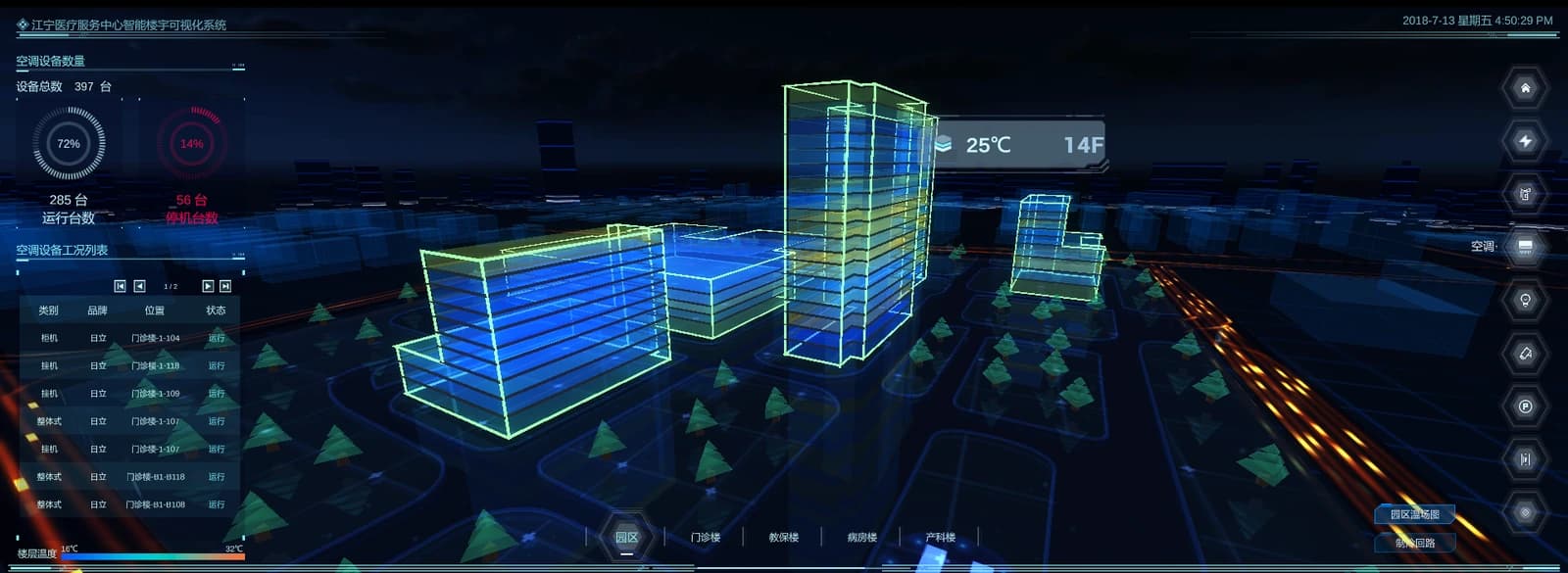
EMS connects particle, viable, temperature, humidity, airspeed and pressure sensors through PLCs to servers and clients, with alarms delivered by SMS, voice, sound/light or event printing. BMS monitors pre/fine filter differential pressure, supply fan start/stop and faults, supply airspeed, supply and return temperature/humidity and exhaust fan status; steam heating and chilled-water valves are PID-controlled, and airlock differential pressure is monitored separately.
Platform and cabinet scope
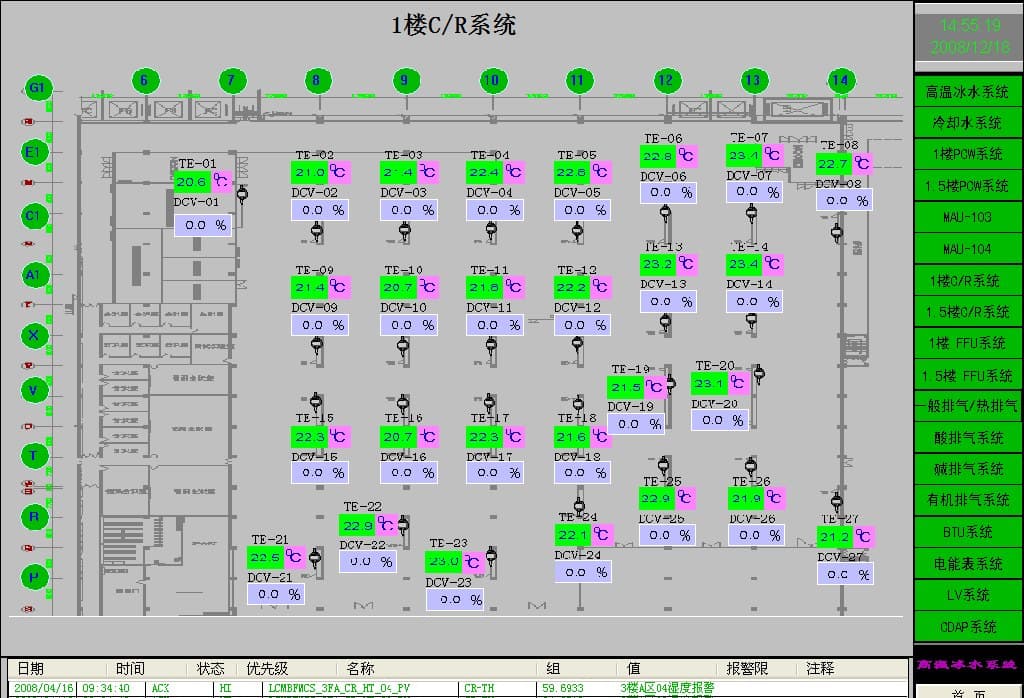
A cleanroom platform typically includes chilled water, cooling water, FFU, exhaust, CDAP, PCW, C/R, MAU, BTU energy management and LV subsystems, with interfaces and alarm ownership confirmed item by item during design. Cabinets cover distribution, VFD, PCS control, SCADA monitoring and BCS recipe cabinets. Cleanroom installation includes motor power conduit, process control and air-piping conduit, with cable routing and cabinet placement following cleanroom construction practice.
Utilities and process interfaces
Purified water, WFI, clean steam, compressed air and chilled water are monitored read-only without changing their existing control logic. Data acquisition and interlock scope for dispensing, filling, sterilisation and packaging is defined by the project URS, with recipe and batch-record boundaries stated in the FS.
Validation delivery
URS/FS support, DQ/IQ/OQ/PQ documentation, FAT/SAT protocols, traceability matrices and training records are provided. Documents are version-controlled and test cases map to specific functions and alarms; deviation handling and change control follow the client's quality system. This describes capability—certification conclusions rest with the client and the regulator.
Networks and redundancy
Control and information networks are segmented, with only necessary read-only interfaces crossing a firewall. Servers, switches and control stations are redundant as the project requires, and the historian is backed up with periodic restore drills.
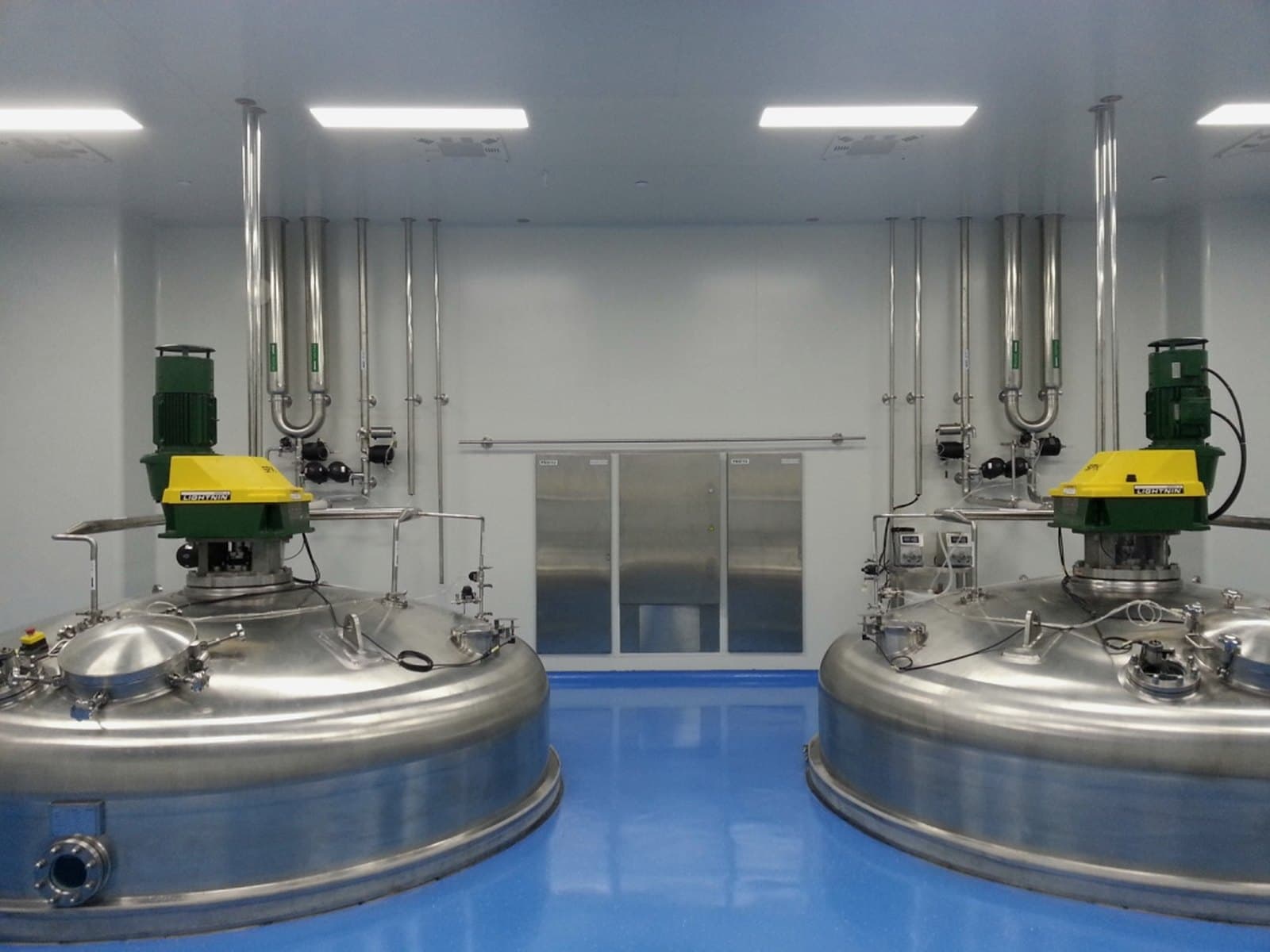
SYSTEM ARCHITECTURE LAYERS
From field instruments to validation records, each layer carries only its own responsibility; data moves one way and control commands never cross layers.
- 01FieldInstrumentsValvesSensorsActuators
- 02ControlPCSBMSEMSSCADAMES/ERP interface
- 03DataRedundant serversHistorianBackup & restore
- 04ComplianceAccess levelsAudit trailE-signatureValidation documents
SYSTEM BOUNDARIES & INTERFACES
Every control output belongs to exactly one system; the others are read-only. The table below is agreed at project kick-off and becomes the responsibility basis in the validation documents.
| System | Owns | Does not own |
|---|---|---|
| PCS | Equipment sequencing, recipe execution, batch-record data capture | Cleanroom HVAC, pressure and door interlocks |
| BMS | MAU/AHU, chillers, exhaust, pressure interlocks and door access | Recipes and batch records |
| EMS | Temperature, humidity, pressure, particle and microbial data; excursion alarms | Any control output |
| SCADA | Plant-wide supervision, alarm aggregation, historian and reports | Direct device control |
| MES / ERP | Batch records, materials and production planning | Real-time control and interlocks |
Swipe the table horizontally to see all columns.
System architecture
A segmented architecture connects field instruments and actuators to the control network, uses a dedicated acquisition path for EMS, places servers in a controlled room, and lets quality and IT systems read data through a firewall.
- Field: process equipment, cleanroom HVAC, particle, viable, temperature/humidity, airspeed and pressure sensors
- Control: PCS/BMS controllers, remote I/O and safety interlocks
- Acquisition: dedicated EMS path and alarm units (SMS, voice, sound/light, event printing)
- Platform: redundant servers, historian, reporting and cleanroom subsystems (chilled water, cooling water, FFU, exhaust, CDAP, PCW, C/R, MAU, BTU energy, LV)
- Compliance: permissions, audit trail, e-signature and validation documents
Interface boundaries: PCS and BMS exchange status and permissive signals only, never control commands; EMS is read-only toward the control network; MES/ERP reads through a DMZ interface.
Advantages
01
Plan early: control rooms, cabinet rooms, cable routes and embedded works fixed with the line schedule
02
Compliance built in: boundaries and validation scope aligned to FDA/EMEA/Schedule M/WHO GMP expectations
03
Design detailed: interfaces, protocols and floor/wall/road crossings frozen before construction
04
Cabinet scope covers distribution, VFD, PCS, SCADA and BCS recipe cabinets
05
Cleanroom installation includes motor power, process control and air-piping conduit
06
Audit trails and e-signatures designed to Part 11 / Annex 11 principles
Outcomes
What the client receives is a system with clear boundaries and traceable evidence: alarms resolve to an owning system, parameter changes carry complete records, validation documents map one-to-one to installed functions, audit preparation takes less time, and future lines extend within the same framework. The exact validation scope is defined by the project URS and quality agreement.
Products in this solution
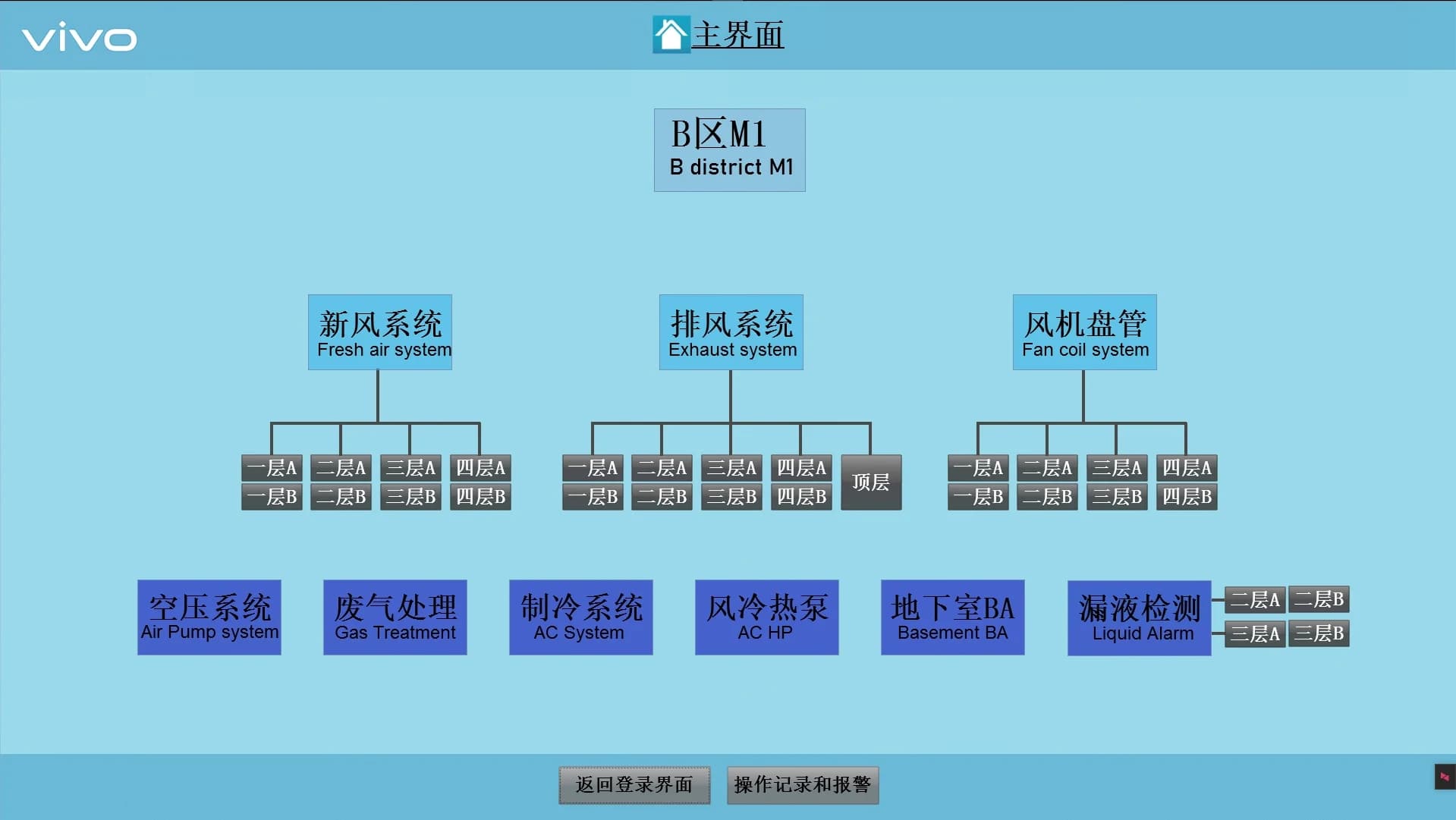
SCADA
Plant-wide SCADA Supervision Platform
A plant-wide supervision platform integrating PCS, EMS, BMS and utilities over redundant servers and industrial networks.
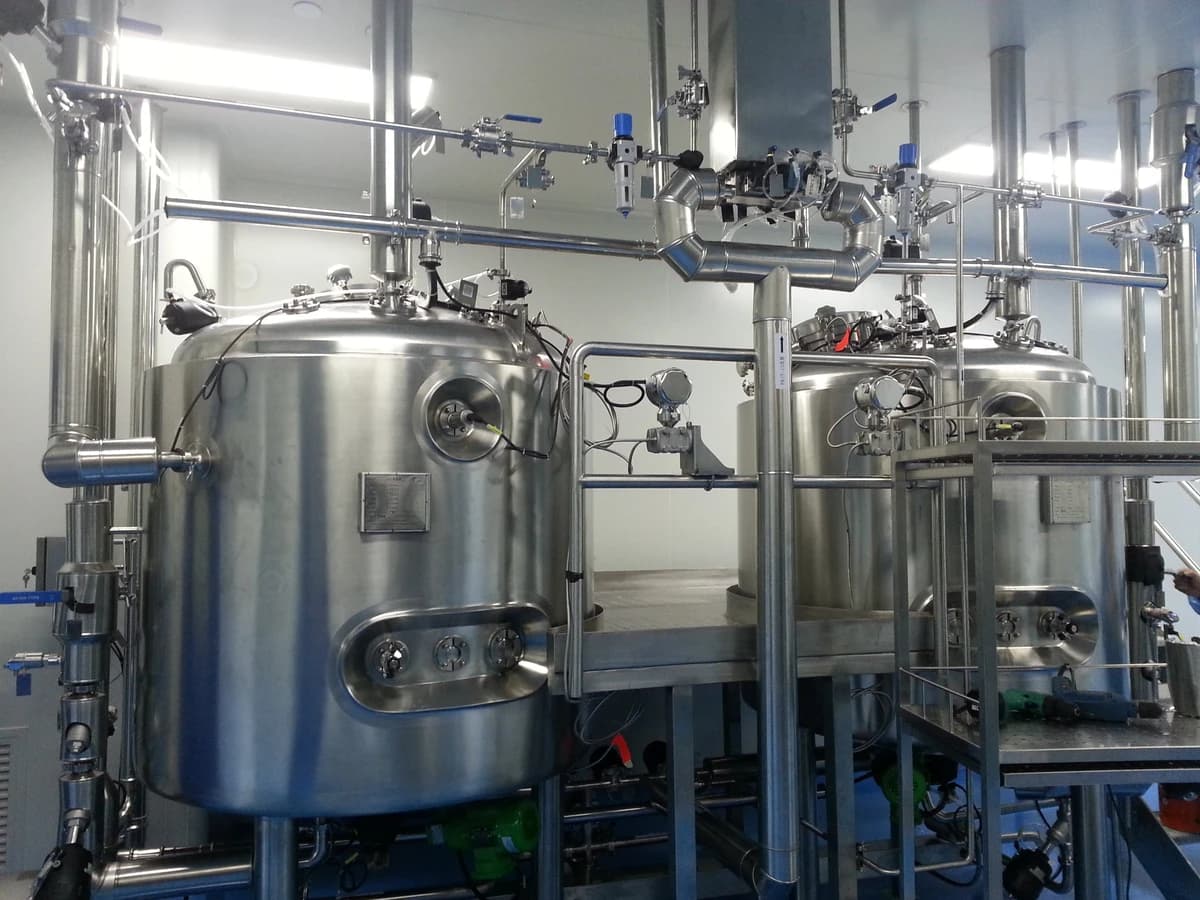
PCS
PCS Process Control System
A PLC-based process control system for sequence control, analogue regulation, data acquisition and recipe download.
EMS
EMS Environmental Monitoring System
Online environmental monitoring for cleanrooms and laboratories, covering particles, temperature, humidity, dew point and differential pressure.
BMS
BMS Building Management System
Building management for cleanrooms, laboratories and public buildings, covering HVAC, interlocked doors and critical utilities.
Smart Lab
Smart Laboratory System
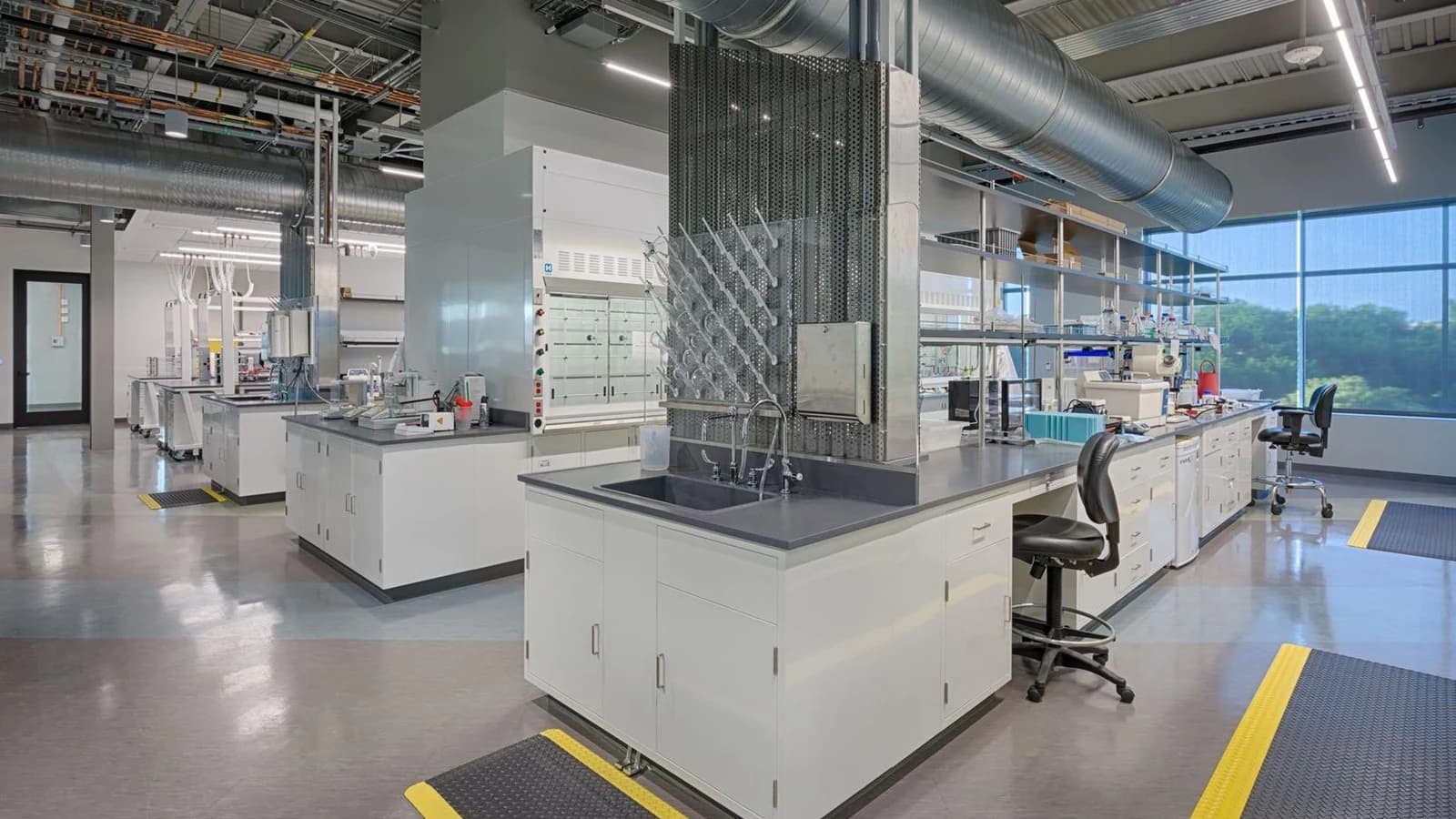
Integrated monitoring for laboratory ventilation, gas supply, environment and equipment safety.
EXPLORE MORE
Explore more solutions
 Water systems
Smart Water & Wastewater Treatment Control
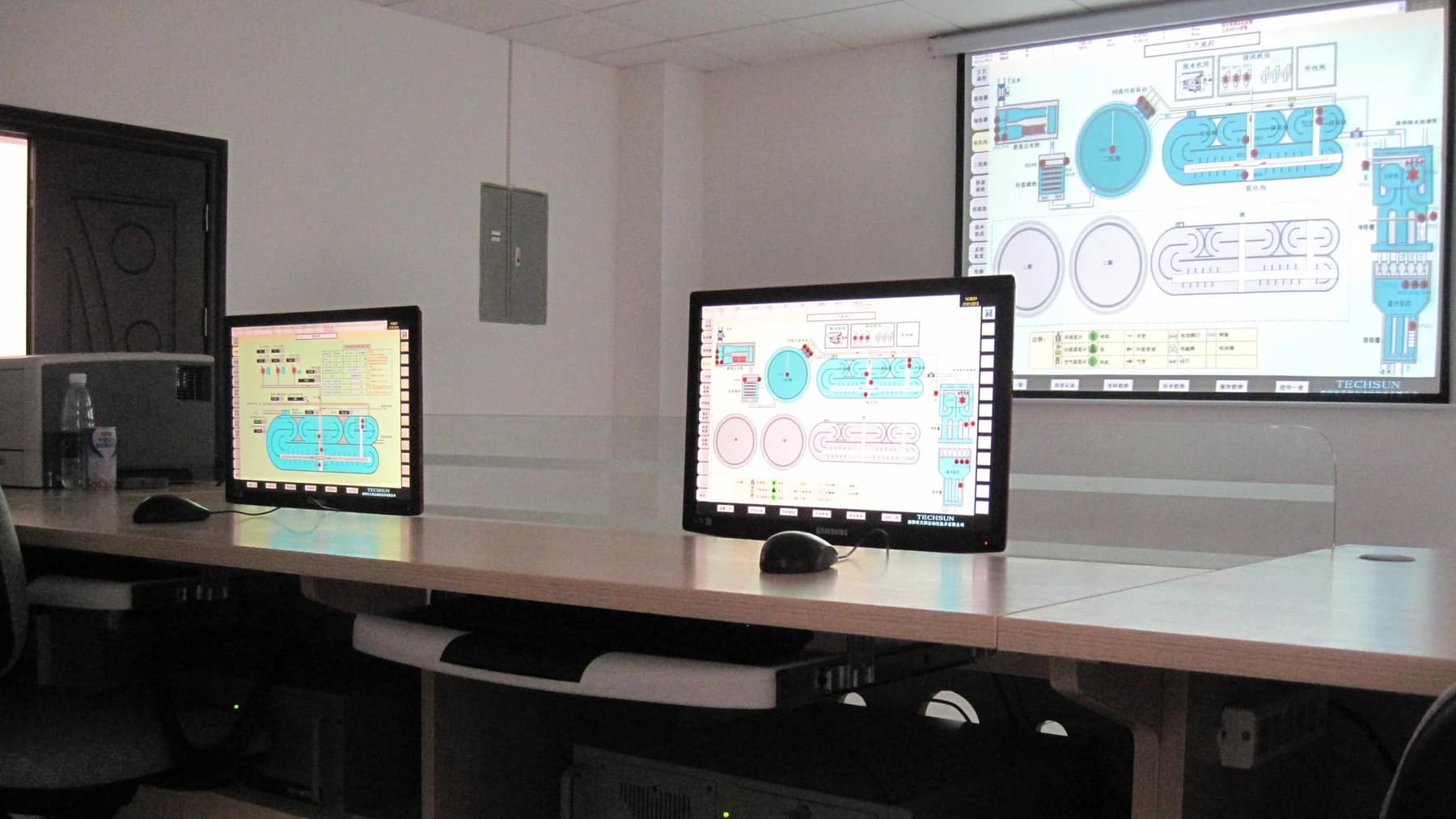
Covering the brochure process train—influent, screening, pumping, oxidation ditch, clarifiers, disc filtration and disinfection—with redundant PLCs, distributed I/O and conditioned analyser data feeding control and reporting.
Discover more HVAC & cleanroom
HVAC & Cleanroom Energy Optimisation
Load-prediction-based chiller and AHU optimisation balancing cleanroom conditions and operating cost.
Discover moreSTART A PROJECT
The next system starts with
a high-quality conversation.
Tell us about your process, site and objectives. Our engineering team will respond within one business day.