Defining the boundaries between BMS, EMS and SCADA
When environmental monitoring, building control and plant supervision share one system, interfaces, alarm ownership and data responsibility must be defined first.
 ZHUOCHUANG / INSIGHT
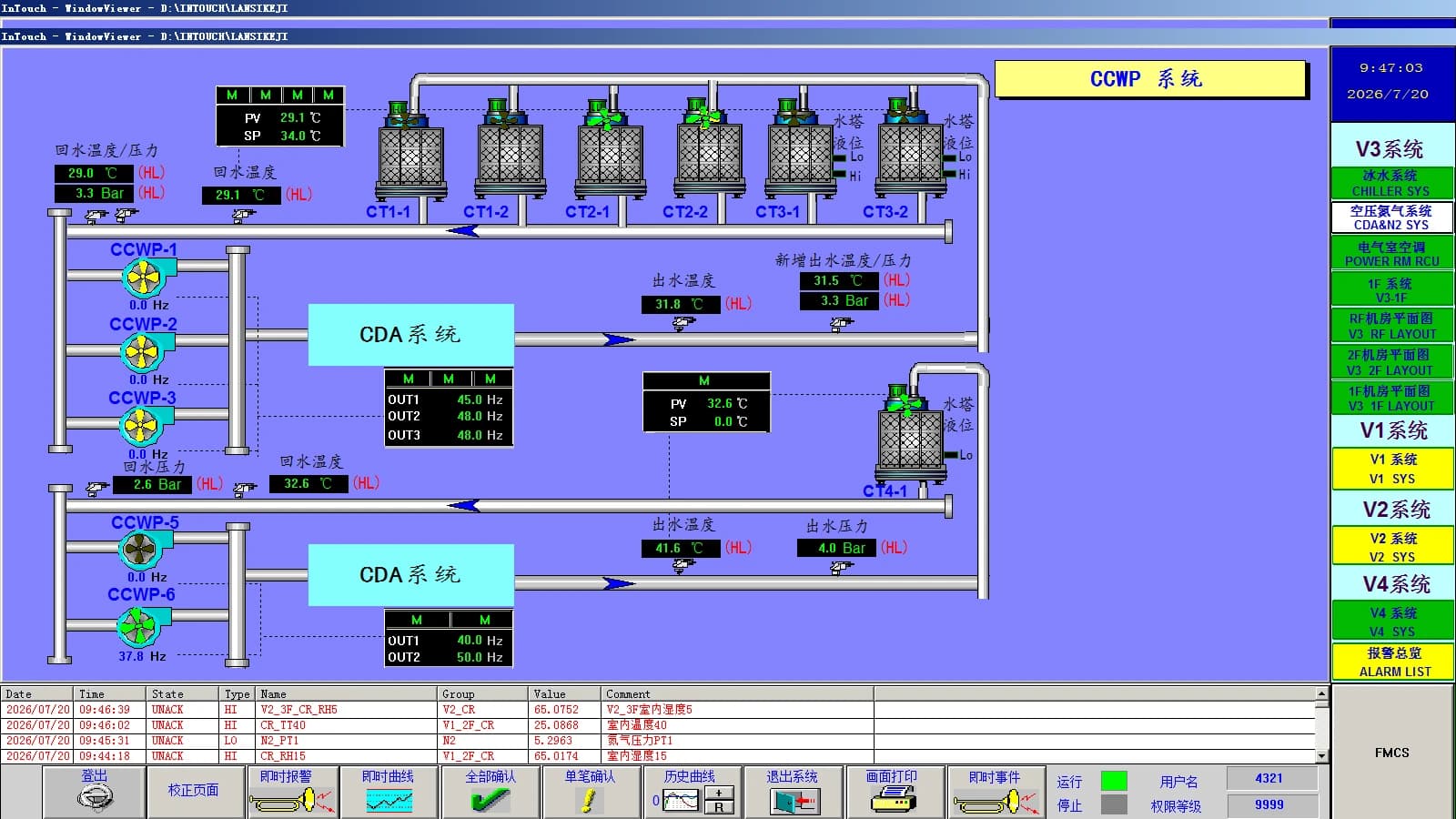
BMS, EMS and SCADA often coexist in pharmaceutical cleanrooms or electronics plants. All three may display temperature, pressure and alarms, but their control responsibilities and data ownership differ. Without clear boundaries, duplicate alarms, command conflicts and uncontrolled validation scope follow.
Assign control responsibility first
BMS supervises HVAC, interlocked doors and critical utilities; EMS monitors cleanroom particles, temperature, humidity, dew point and pressure; SCADA provides the plant-wide operating view, alarm aggregation, history and reporting. Monitoring points can be shared, but every control output needs one owner.
Define the interface
An interface register should state data direction, protocol, update cycle, time-stamp source, who raises alarms, who issues commands, behaviour on communication loss and data-quality flags. Seeing a value on a graphic does not mean the interface has been engineered.
Alarms and audit
The same exception should not generate three unrelated alarms. Designate a primary alarm source; other systems only aggregate or derive notifications. Critical parameter changes, alarm acknowledgements and interlock bypasses need operator, time, reason and before/after values.
- One owner for each control output
- Interface register with direction, protocol, cycle and failure behaviour
- Clear primary and aggregate alarm responsibility
- Time synchronisation, data quality and audit records in validation scope
Final interfaces and validation boundaries are defined by project design documents and the technical agreement.